



Every year, Google Marketing Live introduces new advertising features, AI tools, and platform updates.
This year, the announcements felt less like updates and more like fundamental transformations.
The announcements at Google Marketing Live 2026 weren’t just about making campaign management easier. They signaled something much larger: Google is rapidly evolving from a search engine into a decision-making platform powered by AI. Search results are becoming conversations. Customer journeys are becoming shorter. And AI is increasingly influencing what renters see, click, and ultimately choose.
For apartment marketers, the biggest question isn’t whether AI will impact leasing. It’s how quickly renter behavior will change and whether your marketing strategy is ready when it does.
Here are the announcements that matter most for multifamily marketers and what they mean for the future of apartment advertising.
The Biggest Story: Search Is Becoming an AI Experience
Google doubled down on AI-powered search experiences during this year’s event. AI Overviews continue expanding, AI Mode is growing rapidly, and Google announced new advertising formats specifically designed for conversational search experiences.
For renters, this means fewer traditional searches and more complex questions:
- “What are the best luxury apartments near Amazon’s Seattle office with EV charging?”
- “Find pet-friendly apartments near downtown Denver under $2,500.”
- “Compare apartments with coworking spaces in Austin.”
Instead of reviewing ten websites, renters may increasingly receive a synthesized answer generated by AI.
That’s a significant shift.
For years, multifamily marketers have focused on ranking, bidding, and optimizing for individual searches. Increasingly, success may depend on whether your property information, content, reviews, and business data are trusted enough to become part of the AI-generated answer itself.
AI Max: The Most Important Search Update Apartment Marketers Should Watch
If there was one announcement that generated the most discussion among performance marketers, it was AI Max.
AI Max is Google’s newest AI-powered enhancement for Search campaigns. Rather than relying exclusively on traditional keyword lists, AI Max expands search term matching, dynamically generates ad copy, selects landing pages, and helps advertisers uncover demand they may not be targeting today.
Traditional keyword strategies often miss renter searches like:
- Apartments near major employers
- Pet-friendly apartments
- Apartments with garages or EV charging
- Luxury apartment amenities
- Neighborhood-specific apartment searches
- Relocation-focused searches
- Move-in specials
AI Max has the potential to uncover these searches automatically.
After months of global testing, Google officially moved AI Max out of beta in April 2026. Starting in September, campaigns using Dynamic Search Ads, automatically created assets, and campaign-level broad match will automatically upgrade to AI Max.
Google reports advertisers using AI Max are seeing an average of 7% more conversions at a similar cost per acquisition.
While we believe AI Max represents the future direction of Search, we also believe multifamily operators need the right guardrails before adoption at scale.
Why?
Because apartment marketing isn’t simply about generating more clicks. It’s about generating qualified leads, tours, applications, and leases.
AI Max expands query matching significantly. Without proper oversight, that can introduce irrelevant traffic, such as:
- House shoppers
- Job seekers
- Student housing crossover traffic
- Competitor research
- Low-intent informational searches
In multifamily, lead quality matters more than lead volume.
That’s why we believe success with AI Max will depend on stronger negative keyword governance, first-party data, attribution, lead quality measurement, and Fair Housing oversight. AI can expand opportunity, but it still requires a human strategy.
Google’s Business Agent Could Change the Way Future Renters Engage in AI Results
One of the most intriguing announcements was Google’s expansion of Business Agent capabilities into additional industries, including real estate, automotive, and education.
Think of Business Agent as an AI-powered representative that can answer questions and help consumers move through decision-making processes.
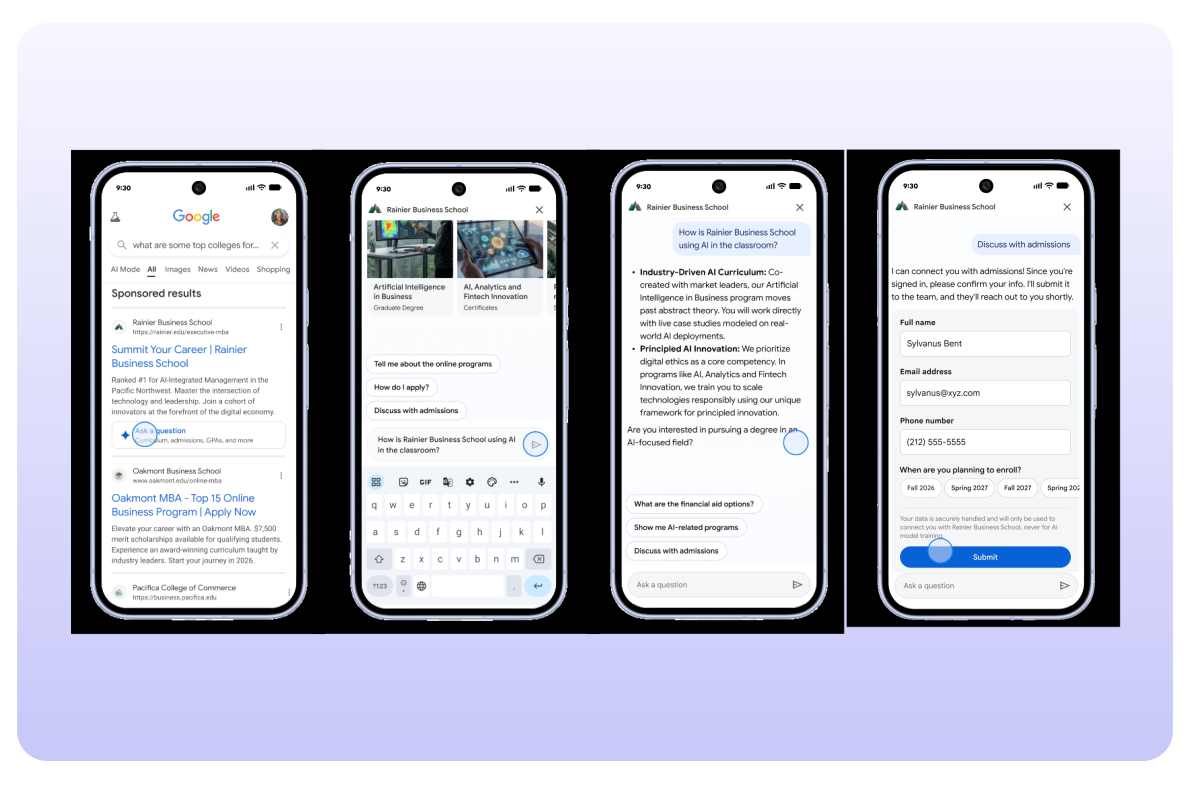
For multifamily, imagine a prospective renter asking:
- Is parking included?
- What’s the pet policy?
- Are there units available this month?
- How close is the community to downtown?
Instead of visiting multiple pages or calling the leasing office, Google could increasingly facilitate those interactions directly.
While we’re optimistic about the direction, we believe the industry needs better visibility into measurement and governance before widespread adoption.
Direct Offers Could Bring Leasing Specials Into AI Search
Google also highlighted Direct Offers, which allow businesses to surface promotions directly within AI-powered search experiences.
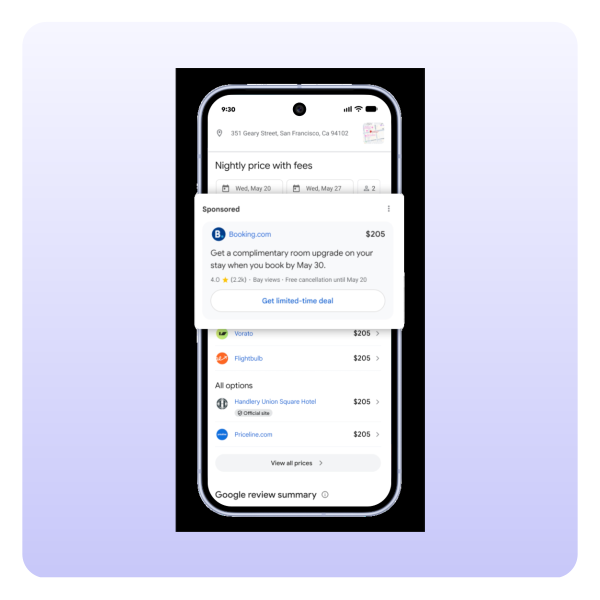
While much of Google’s early focus has been retail, the implications for multifamily are easy to imagine.
Picture a renter researching apartments and seeing:
- One month free
- Reduced security deposits
- Waived application fees
- Limited-time move-in incentives
directly within an AI-generated response.
If these capabilities expand into multifamily, promotional visibility may increasingly happen before a renter ever reaches your website.
Measurement Quietly Became One of the Most Important Announcements
While AI received most of the attention, one announcement deserves more discussion: Google’s continued investment in measurement and data infrastructure. Google introduced Ask Advisor and expanded its vision for a more unified measurement environment across Ads, Analytics, and other Google products.
This matters because AI-powered advertising depends on data quality.
This aligns with something we’ve believed for a long time:
The future advantage won’t come from having more AI. It will come from having better data.
Communities with strong attribution, integrated CRM data, accurate conversion tracking, and visibility into leasing outcomes will be better positioned to benefit from every AI-driven platform update that follows.
What Apartment Marketers Should Do Next
Google Marketing Live 2026 offered a glimpse into where apartment advertising is headed. But most communities don’t need to overhaul their marketing strategy tomorrow.
Instead, focus on building the foundation that future AI-powered marketing depends on.
1. Strengthen First-Party Data
Ensure your CRM, lead tracking, tour data, applications, and lease attribution are connected and measurable.
2. Invest in SEO and Google Business Profile Optimization
Many of the same factors that drive local search visibility today will influence visibility within AI-powered search experiences tomorrow. Accurate property information, reviews, local content, and strong neighborhood relevance matter more than ever.
3. Focus on Lead Quality, Not Lead Volume
As AI introduces new sources of traffic, measuring downstream outcomes becomes increasingly important. More leads do not automatically mean more leases.
4. Prepare for AI, But Don’t Hand Over the Keys
AI can improve efficiency and uncover opportunities. It cannot replace strategic oversight, compliance review, attribution, or operational alignment.
The communities that win won’t be the ones using the most AI.
They’ll be the ones using AI with the clearest strategy.
The Bottom Line
The most important takeaway from Google Marketing Live 2026 isn’t a new ad format or campaign setting.
It’s that Google is redesigning search around decision-making, not information retrieval. AI is increasingly becoming the layer between renters and the properties they choose.
For apartment marketers, that creates both opportunity and uncertainty.
The opportunity is reaching renters earlier, more personally, and more efficiently than ever before. The challenge is maintaining visibility, measurement, and control as AI becomes a larger part of the customer journey.
At Conversion Logix, we’re actively evaluating these emerging technologies, monitoring how they impact renter behavior, and helping operators separate meaningful opportunity from marketing noise.
Want to stay ahead of major changes in multifamily advertising? Sign up for the CLX newsletter below.
