



In a 60-day pilot across 53 multifamily communities, daily budget optimization produced 16 percent more conversions on the same ad spend.
Multifamily marketers have more data than ever, but less confidence in what to do with it.
That tension was at the center of our recent AIM session, which explored how fragmented renter journeys make marketing decisions harder than they should be.
But there is another challenge hiding underneath that visibility problem: most multifamily marketing budgets are still managed on a monthly cadence, while renter behavior, competitive pressure, and advertising performance change every day.
So we put a solution to the test. Over 60 days, across 53 apartment communities, we ran 5,883 budget decisions to answer one question:
Can small, daily budget adjustments outperform traditional monthly budget management without increasing total ad spend?
The answer was yes. But the biggest lessons had less to do with automation and more to do with how multifamily marketers think about performance, attribution, and budget allocation.
The Problem: Marketing Moves Daily. Budgets Usually Don’t.
Most multifamily operators build marketing plans around monthly, quarterly, and annual budgeting cycles. This can become problematic when market conditions change faster than budgets do.
A nearby competitor launches aggressive concessions.
Search demand shifts.
A social campaign starts generating stronger engagement.
A display campaign begins influencing more tours than expected.
The market responds immediately. Most budgets don’t. As a result, many portfolios end up optimizing for a snapshot of performance that no longer exists.
One of our observations from the pilot was that some of the most meaningful opportunities weren’t large budget shifts. They were dozens of small reallocations that accumulated over time.
In other words, performance improvements often came from micro-adjustments rather than major strategic overhauls.
That’s an important distinction because it challenges a common assumption in multifamily marketing: that improving results requires increasing spend.
Often, it just requires moving faster.
The Experiment
To test this idea, we launched a pilot program across 53 multifamily properties over a 60-day period.
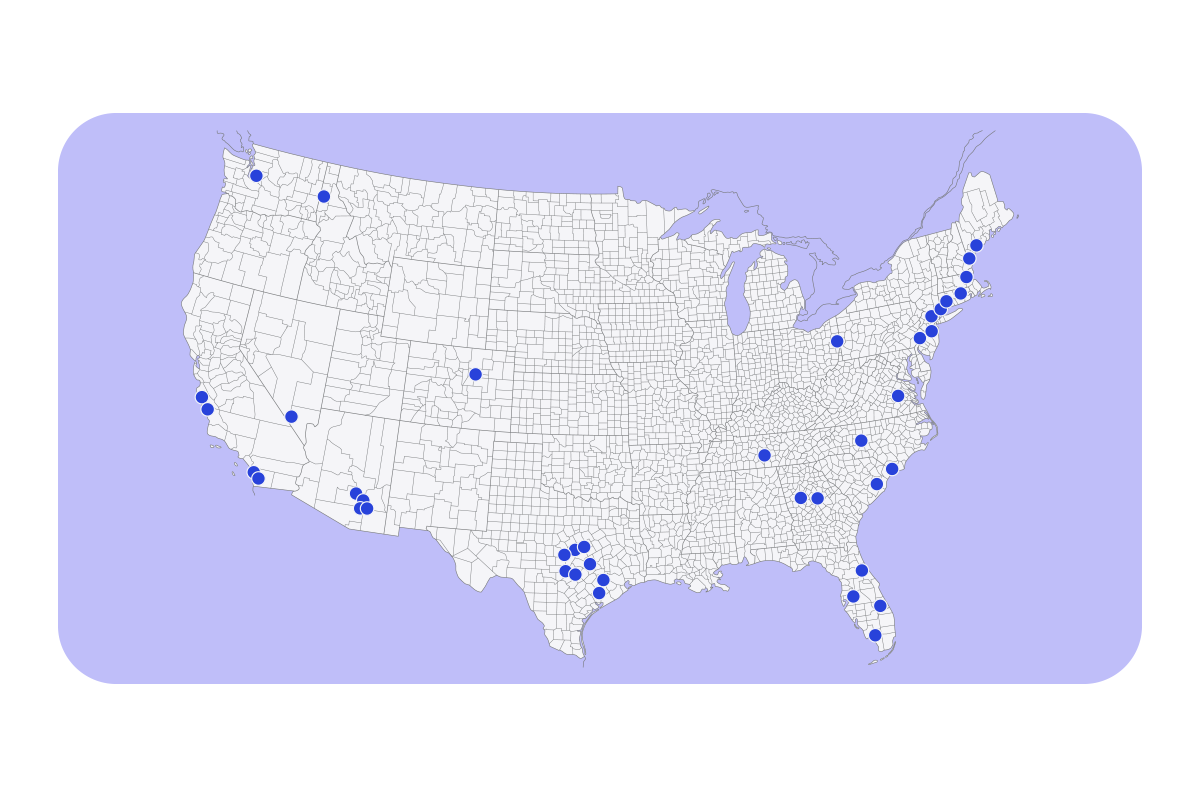 The system made 5,883 budget decisions during the pilot, averaging 98 budget shifts per day and more than 100 adjustments per property. The goal wasn’t to spend more money. The goal was to direct existing dollars toward the campaigns and channels most likely to generate conversions at that moment.
We measured performance against meaningful renter actions, including:
- Scheduled tours
- Form submissions
- Chat engagements
- Virtual tours
- Website calls
- Direction requests
Most importantly, we evaluated performance through the lens of conversions per dollar rather than marketing performance alone.
What Happened
Across the portfolio, properties generated 16% more conversions while maintaining the same monthly ad spend.
Even more notable, the median lift in conversions per dollar reached 26.2%.
Several high-intent conversion actions improved significantly:
- Scheduled tours increased 43%
- Apply Now conversions increased 23%
- Virtual tours increased 11%
- Chat engagements increased 29%
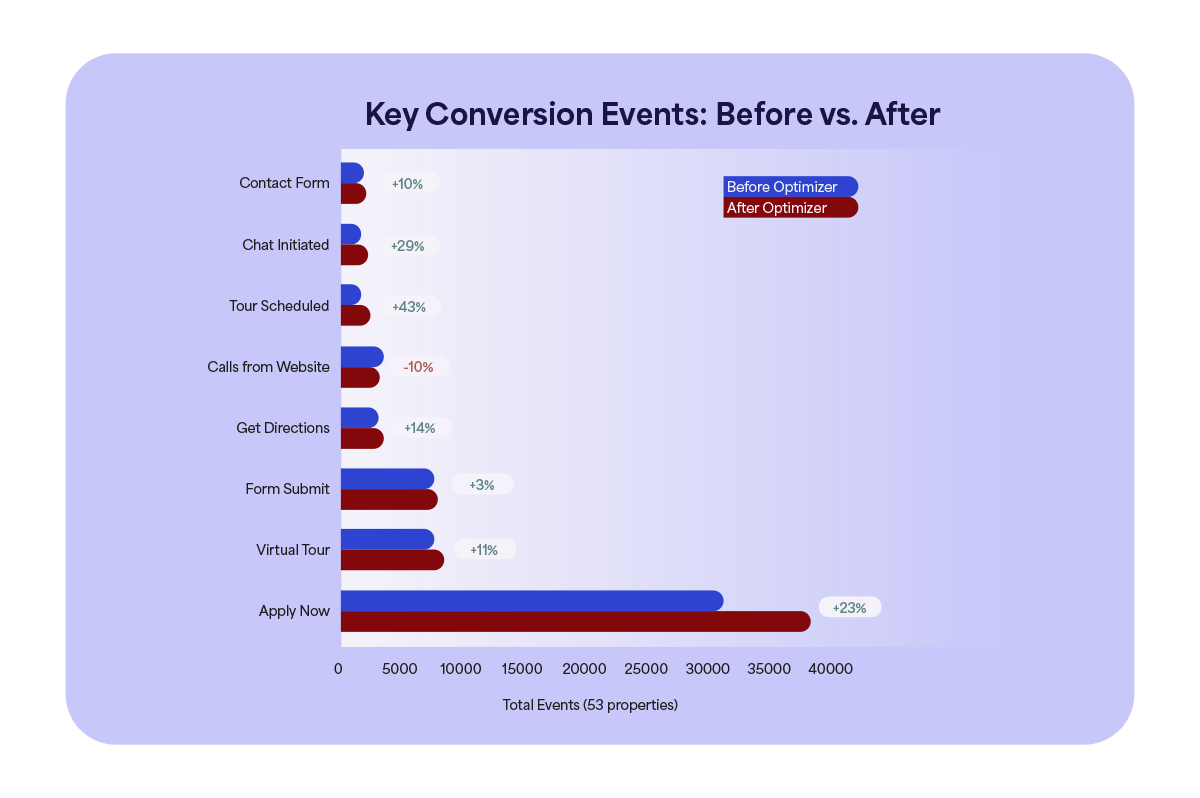
These are the types of actions that directly influence leasing velocity and occupancy performance, not just marketing reports.
The takeaway: meaningful efficiency improvements are possible without increasing budgets.
For multifamily operators facing continued pressure on occupancy and NOI, that’s an important finding.
The Most Interesting Discovery Wasn’t About Budgets
The pilot started as a budget optimization experiment.
It quickly became an attribution experiment.
Because before you can decide where to move budget, you need confidence that you’re measuring performance accurately.
This exposed a problem many multifamily marketers are already experiencing.
The channels that influence renters are not always the channels that receive credit.
When we compared our Unified Attribution model against traditional last-touch attribution, the differences were significant.
- Display campaigns received significantly more credit for conversions than last-touch models suggested.
- Social campaigns contributed more than they appeared to.
- YouTube played a larger upstream role than expected.
- Meanwhile, Organic Search received less credit than traditional reporting often assigns to it.
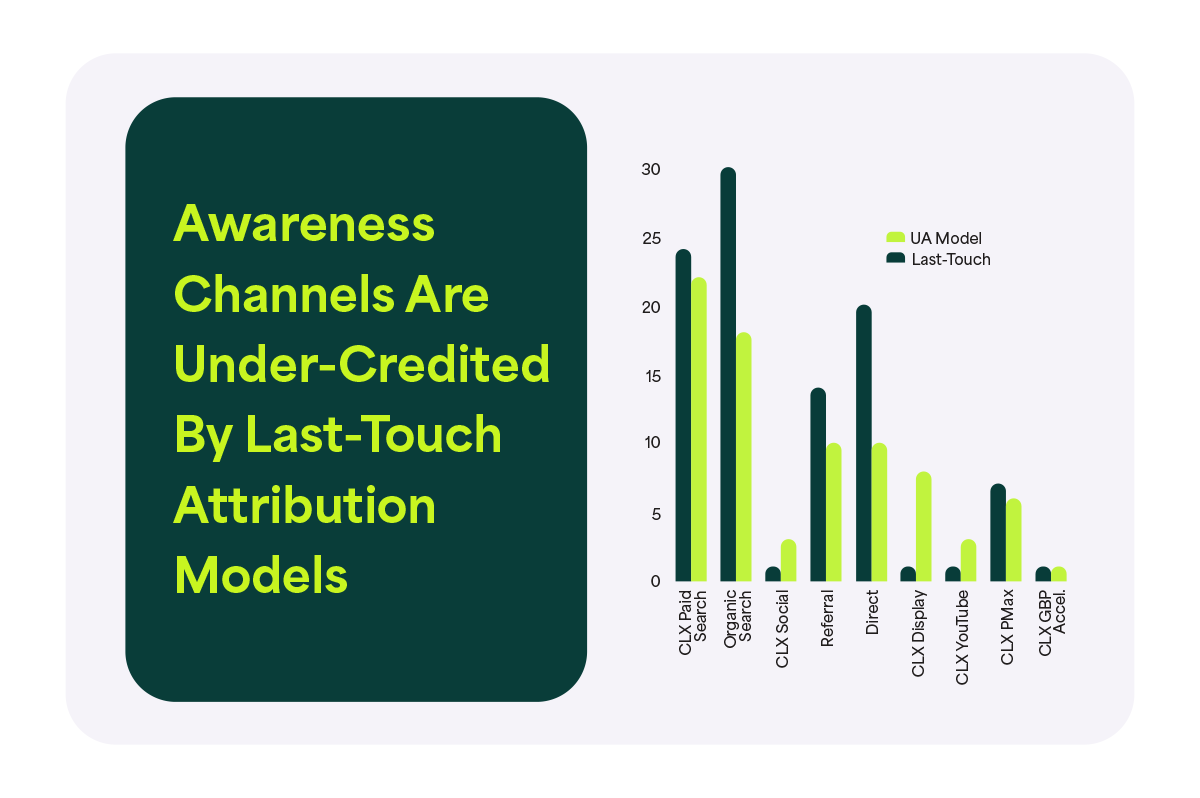
The implication is important.
If your measurement framework consistently undervalues awareness channels, your budget decisions will naturally favor demand capture channels.
Over time, this can create an imbalance in which marketing teams become increasingly efficient at converting existing demand while less effective at generating future demand.
Another Surprising Lesson: Small Budgets Can Create Big Inefficiencies
Campaigns running with less than $400 per month experienced higher failure rates.
More than one-third of campaigns in the $150-$400 monthly range generated zero conversions, compared to just 7% of campaigns funded above $400.
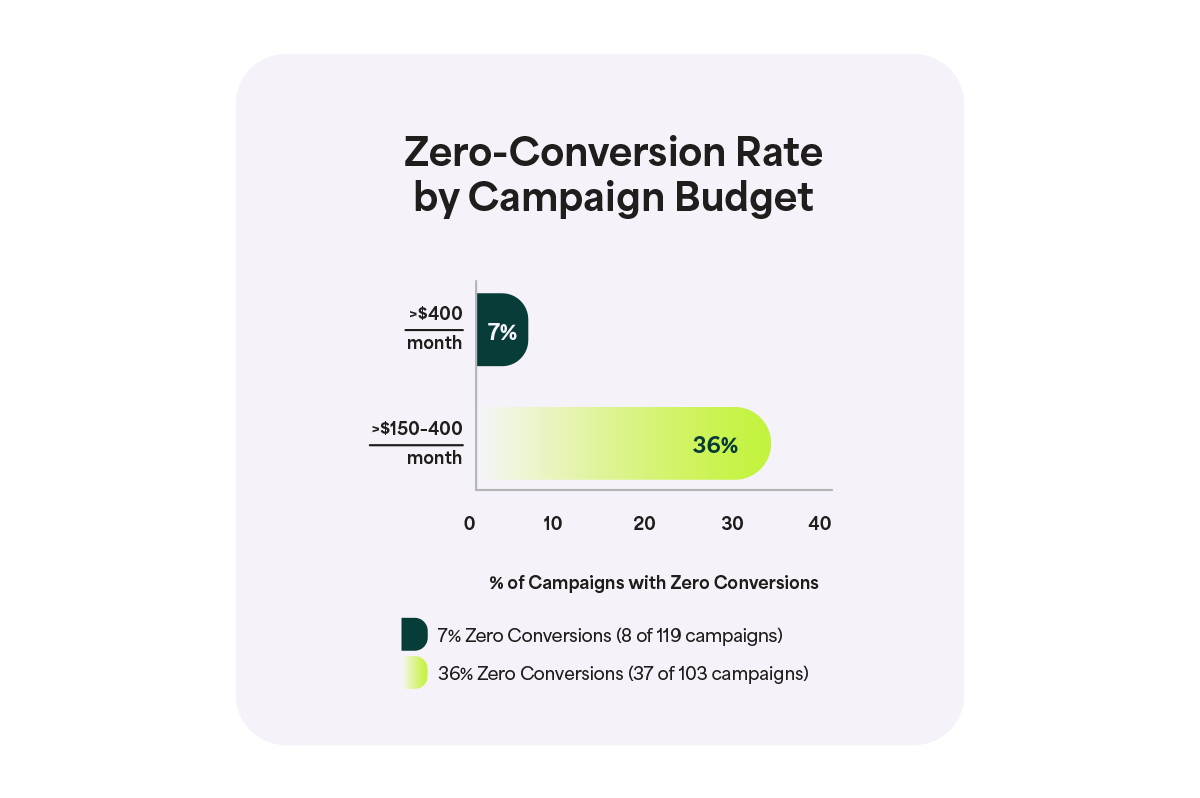
This doesn’t mean every campaign needs a larger budget.
It means fragmentation has a cost.
Many multifamily marketers are trying to maintain too many channels, audiences, and campaign variations with budgets that aren’t large enough to generate meaningful performance signals.
Instead of learning what works, the underfunded campaigns simply don’t generate enough activity to reach their full potential.
Market Conditions Matter More Than Most Teams Realize
Another lesson reinforced something we’ve long believed:
Marketing performance doesn’t happen in a vacuum.
We found that occupancy levels, rent positioning, competitor concessions, and local market dynamics all influenced advertising efficiency.
Properties with favorable market conditions within the pilot realized greater improvements than communities facing aggressive competitive pressure.
That may sound obvious, but it highlights an important shift in how multifamily marketing should be managed.
Performance should not be evaluated solely through channel metrics. It should be evaluated within the context of the market itself.
The most effective optimization strategies don’t just ask:
“Which campaign is performing best?”
They ask:
“Which campaign is performing best given the realities of this property’s market?”
Three Takeaways for Multifamily Marketers
1. Stop Measuring Channels in Isolation
The renter journey is increasingly fragmented.
Evaluating channels independently often leads to underinvestment in the activities that create future demand.
Visibility across the entire customer journey creates better decisions than visibility into individual campaigns.
2. Revisit How Often Budgets Change
Monthly budget reviews may no longer be enough.
That doesn’t mean marketers need to make daily adjustments manually.
It means teams should build processes that allow budget decisions to respond to market conditions more quickly than traditional planning cycles allow.
3. Treat Attribution as a Strategic Asset
Attribution isn’t a reporting exercise.
It’s a decision-making tool.
The quality of your budget allocation decisions will only ever be as good as the quality of the attribution model guiding them.
If awareness channels are consistently undercredited, budget allocation decisions will be skewed from the start.
Where Multifamily Marketing Is Headed Next
If there’s one prediction we feel confident making, it’s this:
The future of multifamily marketing will belong to organizations that can connect attribution, market intelligence, and budget optimization into a single decision-making system.
Not because marketers need more data.
Because they need more clarity.
The pilot reinforced a belief we’ve held for years: the most valuable marketing insights aren’t the ones that explain what happened. They’re the ones that help teams decide what to do next.
As renter journeys become more complex and market conditions continue to shift, the ability to make smarter, faster budget decisions may become one of the most important competitive advantages multifamily operators can develop.
And it starts with seeing the full picture.
This fall, the budget optimization capability behind this pilot will be available inside CLiQ, our predictive leasing platform, giving clients full visibility into every budget decision made on their behalf, directly within the dashboard.
If you want to be among the first to access it, get in touch with our team. Or if you want to go deeper on the attribution problem CLiQ is built to solve, read this next: Why Marketing Attribution Is Failing Property Marketers (and How to Fix It).
We’ll be sharing more findings like these as we expand the pilot. Sign up for the CLX newsletter below to get them first.
