


Marketing leaders are under pressure to learn and deploy new technologies while maximizing lead generation on a budget.
In 2026, senior living marketing will need to focus on strategies that build trust, gain visibility in AI search, improve lead quality, and generate hyperlocal demand.
The Top Trends for 2026:
- GEO is the Future of SEO
- Hyperlocal Marketing
- Authentic Resident Storytelling
- Scaling Personalization With AI
- Lead Quality > Lead Volume
- Price Transparency
- Solo-Agers Are on the Rise
These trends reflect where senior living marketers should focus in 2026 to drive tours, improve occupancy, and stand out in an increasingly competitive digital landscape.
Generative Engine Optimization (GEO) is the Future of SEO
Search is becoming answer-first, not click-first.
AI answers now take up the priority spot in Google search results, and more people are turning to other AI engines such as ChatGPT, Perplexity, and Gemini to find answers to their questions.
What people search for is also changing.
Search marketing is shifting from prospects typing “senior living near me” and expecting a list of websites to appear to asking questions like “Which senior living community located in my area is the best and why?”.
When LLMs generate answers to queries like this, they pull from these signals:
- Google Business Profiles
- Star ratings and review volume
- Location authority
- Directory consistency
- Community reputation across the web
The most important thing to keep in mind is that these signals reward brand building and surface brands based on the questions they are being asked.
Unlike traditional search listings, marketers have less control over when and how they appear in this new search environment. It’s no longer just about showing up, you now have to think about what is said about your brand when prospects ask about you and your competitors online.
This means senior living marketers need to pay closer attention to how their brand is being discussed online and consider how they can become the leading authority for answering the top questions prospects have in their local market.
In 2026, generating positive and specific reviews and being mentioned in forums will become a bigger priority for operators.
Review diversity is also important. AI engines prioritize reviews that mention specific “experience keywords”. So, instead of asking for general reviews, prompt families to review specific departments like “memory care staff” or “culinary programs” to feed the AI signals.
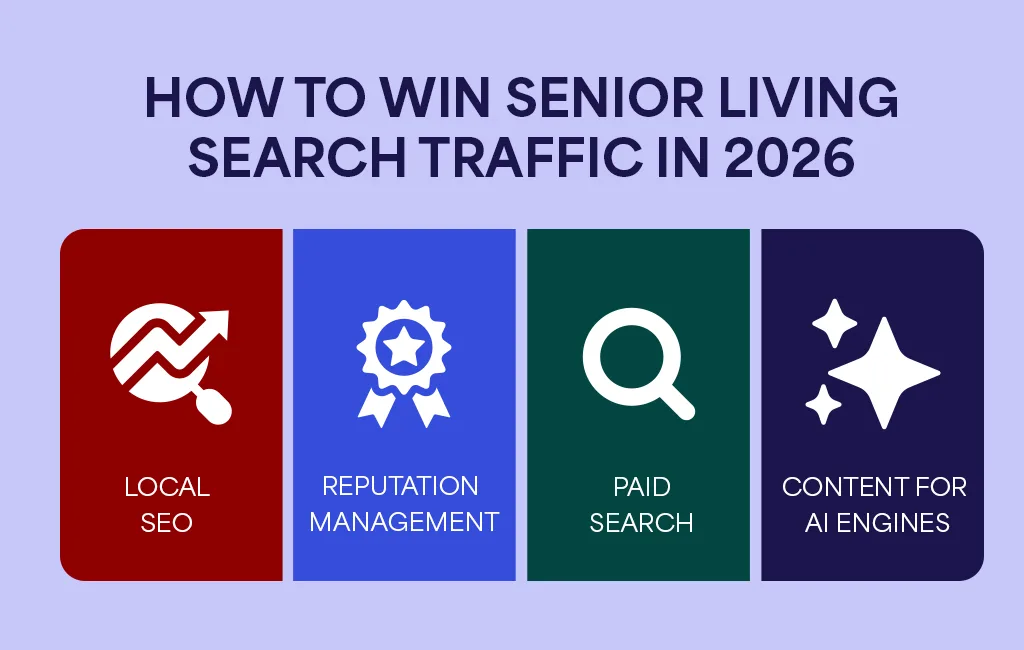
To win in this new landscape, senior living operators need to focus on a robust strategy that includes:
- Local SEO
- Reputation management
- Paid Search
- Content that AI engines can cite
Additionally, as companies lose control over AI search results and how they appear, we are seeing marketers put more effort into building top-of-the-funnel demand through Paid Social, Display Ads, and Performance Max, among other strategies to drive attention to owned channels (website, email, text, in-person events).
During this period of transition, this is the most reliable strategy for maintaining traffic and visibility while you work on building visibility across AI engines.
Next Steps To Optimize Your Visibility in GEO/AIO:
- Optimize your Google Business Profile weekly
- Build FAQ content around real caregiver questions (“When is memory care the right choice?”)
- Actively generate reviews tied to specific experiences (“memory care staff,” “activities,” “food”)
- Build local domain authority with offsite SEO
Winning the Battle for Your Own Backyard With Hyperlocal Marketing
Many families seeking care are looking for centers near where they live and work, making it easy and accessible to visit their senior. This means your highest-quality leads are often those right in your backyard.
To dominate locally, combine precise geographic targeting across Search, Paid Social, and Display with campaigns that speak directly to the prospects who live and search nearby. This cuts wasted spend and increases qualified traffic right in your backyard.
Try these strategies to win over local prospects:
- Run a Paid Search campaign that targets searchers looking for care within a tight radius around your property
- Maintain an optimized Google Business Profile to increase your chances of appearing in Google Maps searches
- Make sure the city you are located in is clearly visible in your ad creative
- Host local events to build a strong reputation within your local community
- Target the buildings that seniors and their families spend time in with geo-fencing
For more local advertising tactics, read this recap from our Senior Housing News webinar “Own Your Zip Code”.
Authentic Resident Storytelling
Families seeking care want to ensure their loved ones are safe, happy, and well cared for. The best way to communicate this in your marketing is to showcase real people and their stories.
This kind of creative builds trust in your brand and drives emotional connection.
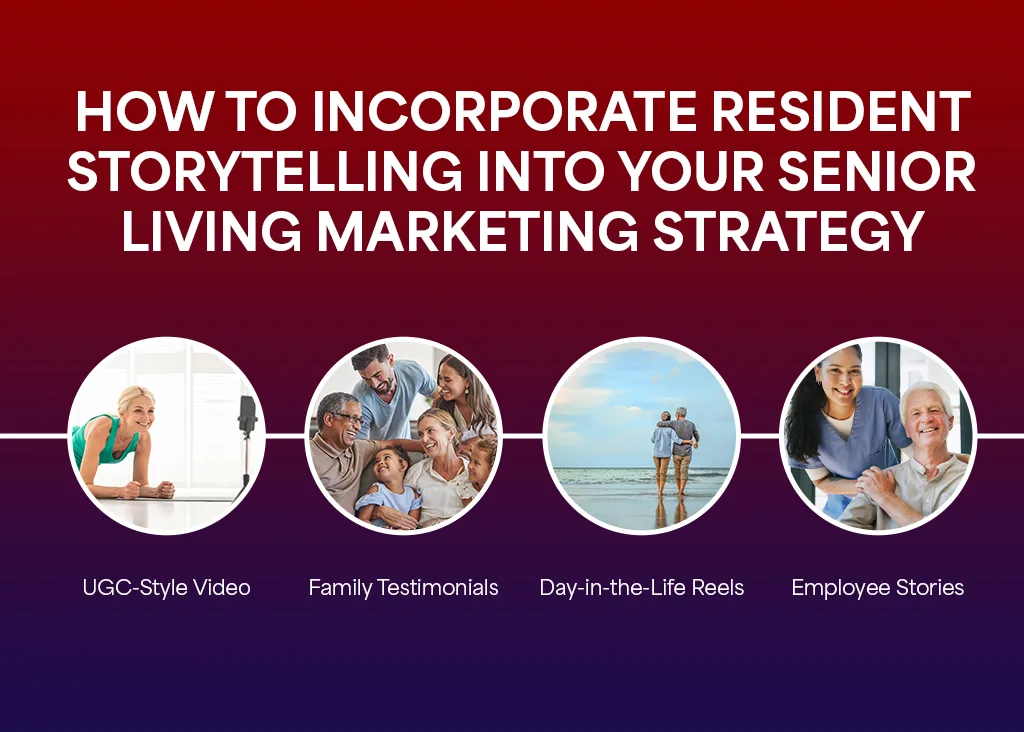
Try the following strategies to make your content more effective at converting future residents:
- User Generated Content (UGC)-style videos
- Family testimonials
- Day-in-the-life reels
- Employee stories (staffing impacts reputation)
These types of stories and formats don’t just need to live on your social pages. They can be leveraged to expand your reach beyond your organic strategies.
Use them to fuel:
- Paid social ads
- Retargeting creative
- Landing page proof points
- Email nurture campaigns
Scaling Personalization With AI
Families expect the same tailored experience they get from healthcare and ecommerce brands.
Meanwhile, the senior living industry has a unique challenge marketing to many different stakeholders with varying care needs while addressing a range of pain points.
AI makes it easier than before to scale the volume of creative strategies you can try to attract and convert move-ins.
You can use it to iterate on and templatize personalized messaging strategies quickly so you can provide targeted follow-up responses to scale your marketing effectively.
Try out these proven tactics:
- Personalized landing pages by care type (memory care vs IL)
- AI-driven lead nurturing sequences
- AI chatbots
Here are some examples of personalization strategies:
- Adult daughters researching urgently
- Couples planning proactively
- Memory care decision-makers
- Solo agers without family advocates
Keep in mind, AI should enhance empathy, not replace it. The goal is personalization that feels human.
Lead Quality > Lead Volume
In 2026, the communities that grow aren’t just generating more leads; they’re generating better ones.
Operators are exhausted by:
- unqualified inquiries
- high CPL with low move-in rates
- marketing teams only chasing volume
One of the biggest challenges senior living sales teams face is lead quality.
Here are a few tactics that can help:
- Integrate your marketing data with your CRM
- Track conversions and optimize campaigns around actions that signal real intent:
- Schedule-a-tour submissions
- Live Chat conversations
- Phone calls
- Visits to floorplan pages
- Dial in ad messaging to attract prospects like the ones who have already moved in
- Retarget engaged website visitors
- Ask the right lead qualification questions on forms, in Live Chat, and when prospects schedule a tour
Price Transparency
Families want clarity earlier in the buying process about what senior care will cost.
Additionally, senior living sales and marketing teams want more qualified leads. Price transparency can actually be helpful for reducing unqualified leads.
Here are some tactics senior living companies have been using to address price transparency in a way that works for both prospects and sales teams:
- Adding “Starting at” pricing in messaging
- Using web applications like Income Calculator to pre-qualify leads
- Highlight a “What’s included” breakdown to build confidence in the price
- Help prospects compare the hidden costs of home maintenance versus the all-inclusive nature of your community
- Host financial planning webinars
At the end of the day, transparency builds trust and filters out families who aren’t financially aligned, which saves sales teams time.
Solo-Agers Are on the Rise
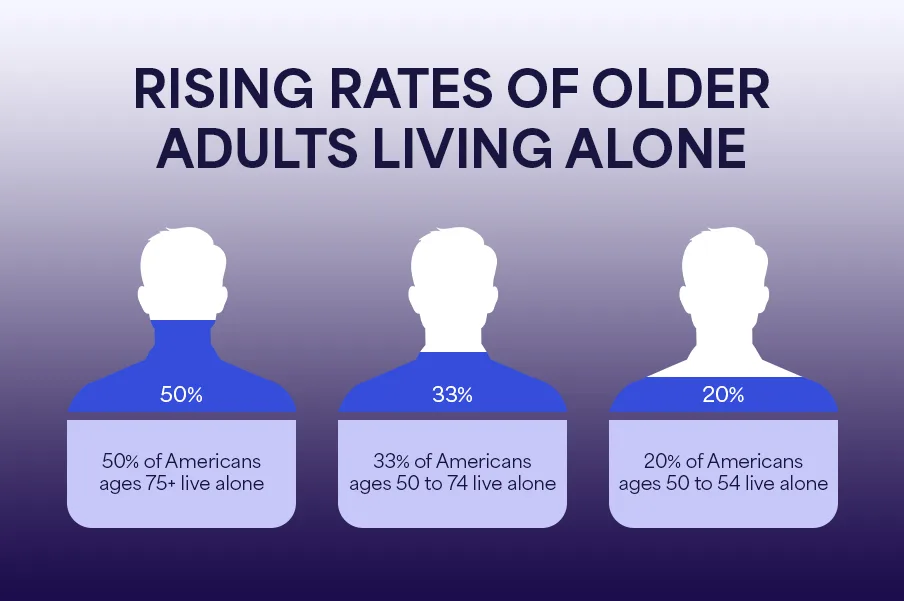
Recent data show that a large population of U.S. adults is aging without a spouse, partner, or household member. Today, half of Americans 75+ live alone, and one in three Americans ages 54-74. According to a Harvard University expert’s estimate, this trend is expected to continue, and by 2038, a majority of adults 80+ (10 million people) will be aging alone (Source: AARP).
A number of factors are driving this trend, including:
- Lower marriage rates
- More gray divorces and marital separations
- Greater longevity and less poverty
- Older adults’ desire to age in place
- Increase in childlessness
- Smaller families that live farther apart
Only a minority (26%) of Solo Agers are confident that their current support network (friends and neighbors) can provide long-term care (Source: Society of Actuaries Research Institute).
What this means for senior living marketers:
- More self-directed research, less adult-child decision-making
- Messaging shifts from “family peace of mind” to “independence + lifestyle”
- Focus more on proactive lifestyle and planning support vs. crisis support
Looking Ahead
Senior living marketing in 2026 is being reshaped by AI discovery, hyperlocal competition, rising consumer expectations, and changing demographics. Communities that invest now in trust-building, smarter targeting, and high-quality lead generation will be positioned to succeed.
